FAQ
What ages of children is this book appropriate for?
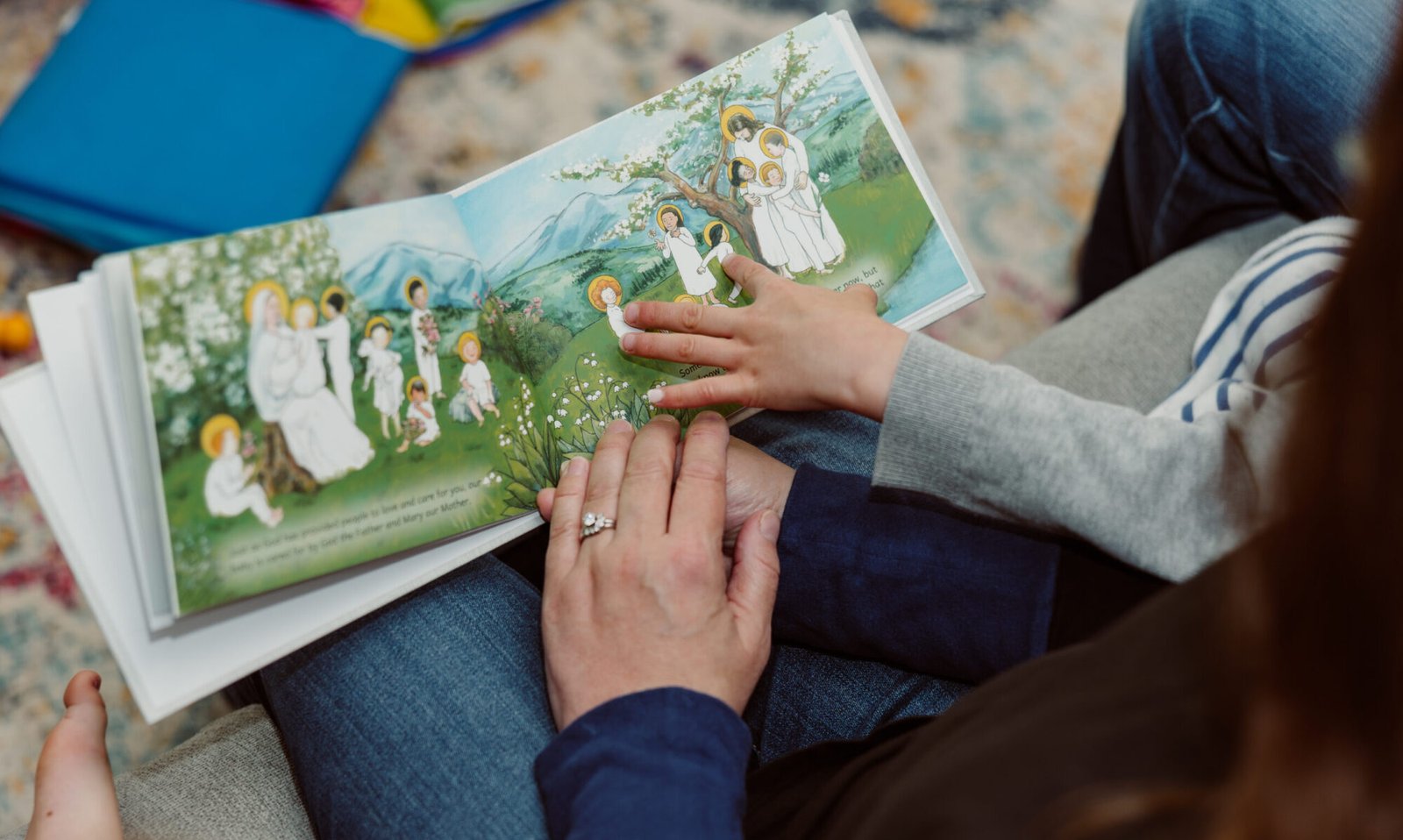
Every child is different, but we feel this book is most appropriate for children ages 3-10. The pictures will help the littlest ones imagine and follow along with the story. There are pages at the end where there is space for your child to write and draw that are tailored to older children, but can be “grown into” as small children get older or you may assist your child(ren) in filling out those pages.
How should I use this book?
Of course, every family is different so there is no “right” way to use this book; however, here is what we suggest:
When you receive the book, we suggest parents take some time to read and pray with it before reading the book with your living child(ren). Parents can write in how they want to refer to the child(ren) who have died, add a family photo, and complete the page to describe your feelings.
Then, when you are ready to sit down with your living child(ren) to share the story, we suggest setting aside enough time to read the story and time for the children to ask questions and complete the pages for personalization, notes, and memories at the back of the book. Some things you may wish to have available are important dates, pictures, or sonograms of the children who have died, information about burial sites (if applicable), any particular ways you memorialize the child(ren) who have died in your family. You may also want to have adhesive to secure photos and writing implements to personalize those pages.
Here is a list of our favorite supplies:
· Colored pencils: Prismacolor premier 12-pack
· Pen: Derwent Linemaker Black 0.5
· Adhesive: Glue Dots – Removable Dot N’ Go Dispenser
What should I use to write in the book?
We recommend using a fine tip, acid-free permanent pen/marker to write in this book; it will prevent smudges and fading over time. Always test first!
Here is a list of our favorite supplies:
• Colored pencils: Prismacolor premier 12-pack
• Pen: Derwent Linemaker Black 0.5
• Adhesive: Glue Dots – Removable Dot N’ Go Dispenser
I want your books or prayer cards for my parish, organization, or ministry.
Inquire here. Please be sure to include your parish/organization/ministry name, your location, and the quantity you desire.
How do I know what happens to my baby?
This section was taken from Catholic Miscarriage Support and is used with permission. We thank Sara R. for her willingness to share her writing with us.
What does the Church teach?
As a Catholic, you may be wondering what the Catholic Church has to say regarding miscarriage, the unbaptized, and salvation. Using Church documents, we hope this page will bring you peace and understanding.
Life Begins at Conception
To start, we have to operate under the knowledge that the Church holds every person’s life to be sacred, and that life starts at conception.
“Before I formed you in the womb I knew you, and before you were born I consecrated you.” (Jer 1:5)
“Every human life, from the moment of conception until death, is sacred because the human person has been willed for its own sake in the image and likeness of the living and holy God.” (Catechism of the Catholic Church, no. 2319)
“From the moment of conception, the life of every human being is to be respected in an absolute way […]; his whole being bears the image of the Creator.” (Donum Vitae, Congregation for the Doctrine of the Faith, Introduction no. 5)
Salvation Without Baptism
Let’s read exactly what is stated in the Catechism of the Catholic Church, no. 1261:
As regards children who have died without Baptism, the Church can only entrust them to the mercy of God, as she does in her funeral rites for them. Indeed, the great mercy of God who desires that all men should be saved, and Jesus’ tenderness toward children which caused him to say: ‘Let the children come to me, do not hinder them,’ allow us to hope that there is a way of salvation for children who have died without Baptism.
To add to that, there is also an understanding of “baptism by desire” (cf. Catechism, no. 1259-60) in which it is taught that people who die while unbaptized are supposed to have been baptized by their “explicit desire” to receive this sacrament. This may also apply to children whose parents intended to baptize their child after birth.
If you are still worried that baptism was absolutely necessary, you may also want to see no. 1257 in the Catechism, which ends with this line: “God has bound salvation to the sacrament of Baptism, but he himself is not bound by his sacraments.” It is put another way here:
“Baptism is necessary for salvation for all those to whom the Gospel has been proclaimed and who have had the possibility of asking for this sacrament.” (Compendium of the Catechism of the Catholic Church, no. 261)
God is all powerful and also merciful. The Church is compassionate and very hopeful regarding your child(ren)’s salvation.
For more reading on the subject of unbaptized infants, please see the International Theological Commission’s The Hope of Salvation for Infants Who Die Without Being Baptised.